Behind the Machines: My Conversation with Tony Ingram
On Maintenance & Manufacturing Insights, Tony Ingram — Senior Maintenance Supervisor at Daikin Applied — shares how his team keeps equipment ranging from decades old to nearly new running: moving toward predictive maintenance, managing thousands of spare parts, finding skilled technicians, and one failure that left roughly two tons of steel 30 feet in the air.
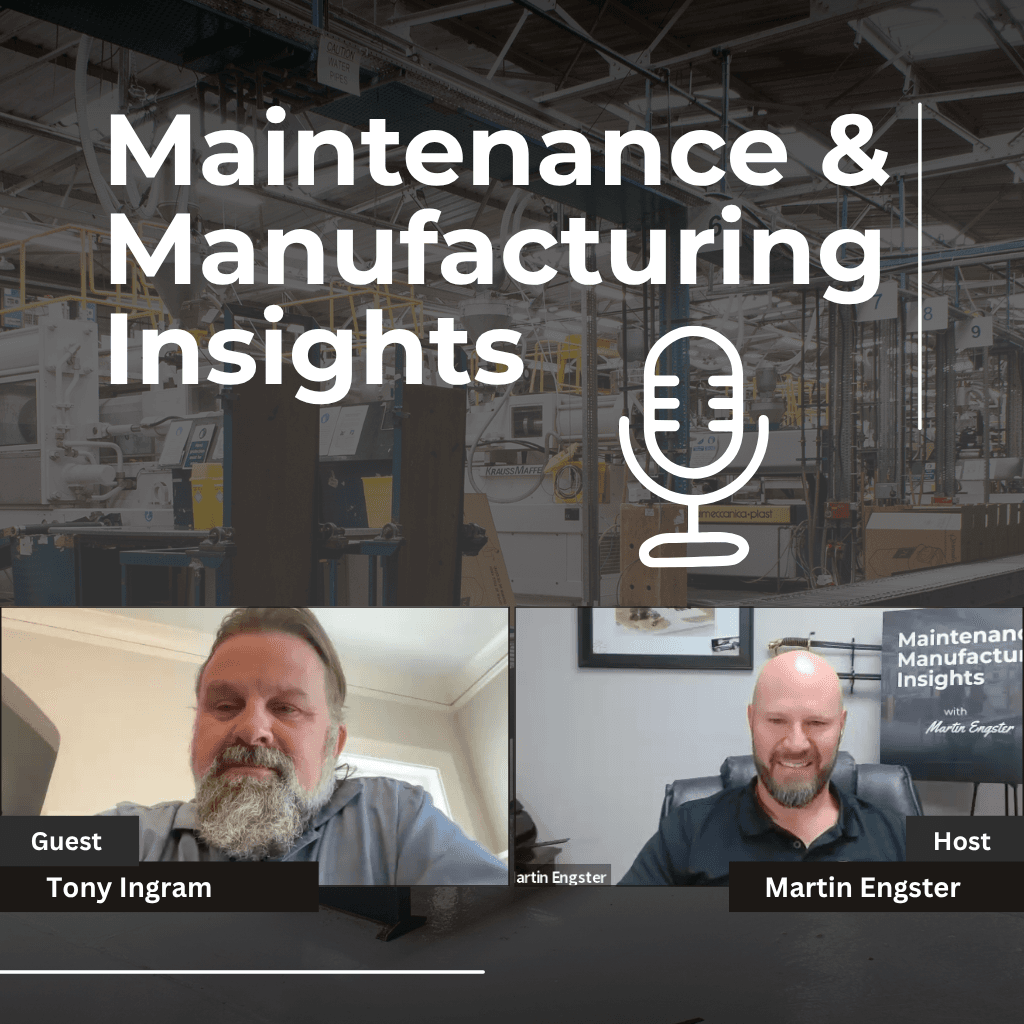
What does it really take to keep a manufacturing plant running? On this episode of Maintenance & Manufacturing Insights, I had the pleasure of sitting down with Tony Ingram, Senior Maintenance Supervisor at Daikin Applied in Faribault, Minnesota. Tony and his team keep equipment running in a facility that manufactures large air-conditioning systems for data centers, hospitals, factories, and schools.
What makes his job especially interesting is the wide range of equipment his team maintains. Some machines have been around for decades; others are nearly brand new. Each generation brings its own challenges.
Old Machines, New Machines, Different Problems
Older equipment can create headaches with wiring, missing documentation, and hard-to-find replacement parts. Newer machines bring a different challenge: figuring out which critical spare parts should already be on the shelf before the first failure ever happens.
Tony believes maintenance needs to be involved early, the moment new equipment arrives. Identifying and stocking critical replacement parts before a machine goes into production can prevent a lot of scrambling later.
Moving Toward Predictive Maintenance
One of the topics Tony and I dug into was the move from reactive and preventive maintenance toward a more predictive approach. His team uses information like vibration, temperature, oil levels, and tooling cycles to catch potential problems before they turn into unplanned downtime.
We also talked about spare-parts management. Tony's facility maintains thousands of parts — and as every maintenance professional knows, one small missing component can become a very big problem when production is waiting on it.
When Safety Comes Before Speed
Tony also shared one of the most memorable equipment failures of his career. A problem with a large steel storage system left roughly two tons of steel sitting about 30 feet in the air.
Instead of rushing the recovery, the team stopped, evaluated the situation, and built a safe plan. It took about six hours to move the steel, straighten the equipment, and get the system back into position. It was a great example of an important maintenance principle: downtime matters, but safety comes first.
The People Behind Reliable Equipment
Technology is only one part of a successful maintenance program. Tony told me that finding quality maintenance technicians is one of his biggest challenges. The right people need to troubleshoot problems, understand different generations of equipment, work safely, and make good decisions when production is depending on them.
We even took the conversation outside the plant — Tony is an avid motorcycle rider who works on his own bikes, including a major engine repair after breaking third gear on his Victory. It was a fun conversation and a great look behind the scenes at the people who keep manufacturing moving.
Watch & Listen
If you haven't listened yet, I encourage you to check out my conversation with Tony Ingram: