Beyond the Wrench: My Conversation with Sean Archer
On Maintenance & Manufacturing Insights, Sean Archer — a maintenance manager in heavy steel manufacturing leading a team of 13 — shares how preventive and predictive maintenance, root cause analysis, and modern controls like Allen-Bradley and Rockwell are reshaping the skills the plant floor demands.
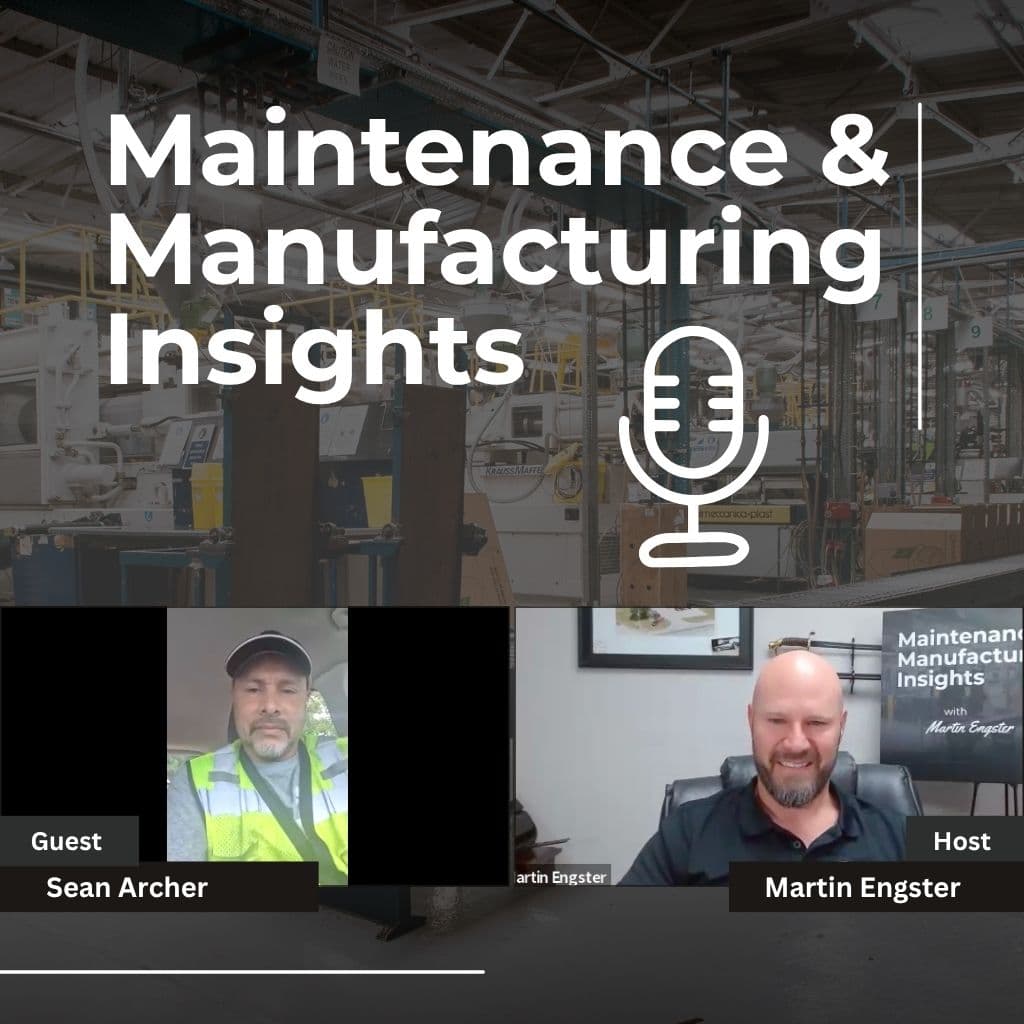
What does it really take to keep a heavy industrial facility running safely, reliably, and on schedule? On this episode of Maintenance & Manufacturing Insights, I had the opportunity to sit down with Sean Archer, a maintenance manager in the metal manufacturing industry who leads a team of 13.
Sean and his team are responsible for keeping a wide range of equipment running — pumps, drives, overhead cranes, coil handling equipment, heating systems, PLCs, and industrial controls. It's a great example of just how broad the responsibilities of a modern maintenance department can be.
Getting Ahead of the Breakdown
One of the topics Sean and I discussed was the importance of moving beyond reactive maintenance. His team uses preventive and predictive maintenance to stay ahead of equipment problems, performing daily, weekly, monthly, quarterly, and yearly PM tasks.
Sean also stressed the importance of root cause analysis. When the same bearing fails every few months, replacing it again might get production moving — but it doesn't answer the bigger question: why does it keep failing? Finding that answer can prevent the same problem from coming back.
Maintenance Requires New Skills
One of my favorite parts of our conversation was Sean's perspective on how maintenance is changing. As he explained, modern maintenance isn't all "screwdriver and hammer." Today's maintenance professionals may need to understand PLCs, drives, computerized maintenance systems, automation, and increasingly sophisticated industrial controls.
Sean has experienced that transition firsthand — his facility invested in replacing outdated controls with newer Allen-Bradley and Rockwell Automation technology. The lesson is simple: as the equipment changes, maintenance professionals have to keep learning too.
When Every Hour Counts
Sean shared a real-world story about an equipment failure involving a programmable valve that controlled gas to an incinerator. After the team struggled to get the old valve working, Sean came into the facility that evening. They ultimately replaced and reconfigured the valve and had production running again by about 10 p.m.
When downtime can cost thousands of dollars per hour, getting equipment back online quickly matters. But the conversation also highlighted something bigger: maintenance professionals are doing important work behind the scenes every day. When everything works, that effort may go unnoticed — when something stops, everyone suddenly understands how valuable a strong maintenance team really is.
Final Thoughts
Sean's experience is a great reminder that the maintenance field is evolving fast, and the professionals who keep learning are the ones who keep production moving. Sean says LinkedIn is the best place to connect with him.
Watch & Listen
If you haven't listened yet, I encourage you to check out my conversation with Sean Archer: