From Preventive Maintenance to 3D Printing: My Conversation with Richard Kaczmarek
On Maintenance & Manufacturing Insights, I talk with Richard Kaczmarek — with experience from Briggs & Stratton, Gulfstream, and GE Aviation — about why maintenance should never be the first budget cut, what happens when technology outpaces training, and how 3D scanning and printing let him recreate a custom aircraft wingtip for a fraction of the usual cost.
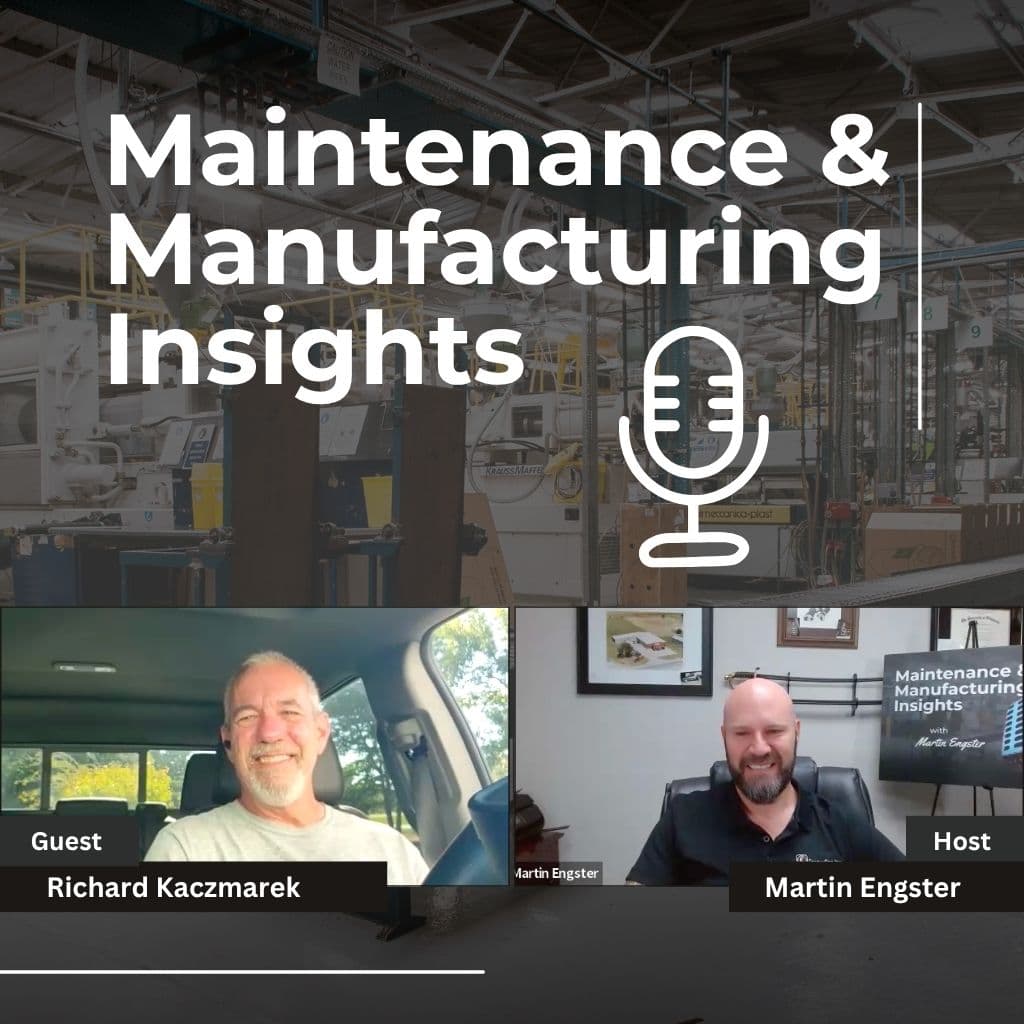
What happens when manufacturing technology moves faster than the people responsible for keeping it running? That's one of the questions I got into with Richard Kaczmarek on this episode of Maintenance & Manufacturing Insights. Richard brings years of experience from Briggs & Stratton, Gulfstream, and GE Aviation, and a lifelong passion for aircraft — a combination that gives him a sharp perspective on equipment reliability and the challenges facing manufacturers today.
Why Maintenance Should Never Be an Afterthought
One of Richard's strongest beliefs is that preventive maintenance should be a priority — not the first expense a company cuts when budgets get tight. I couldn't agree more. When equipment isn't maintained, production suffers, quality slips, and small issues turn into expensive breakdowns. Regular maintenance is how you find worn components and catch potential failures before they stop the line.
When Technology Outpaces Training
We also talked about the growing gap between how sophisticated equipment has become and the training maintenance teams actually get. Even experienced professionals sometimes need the equipment manufacturer's help to diagnose a problem. Add in the challenge of finding and keeping skilled workers, and it's clear why hands-on leadership matters — keeping production running is everyone's responsibility, not just the maintenance department's.
How 3D Printing Is Changing Aircraft Restoration
My favorite part of the conversation was hearing about Richard's work with aircraft. He's been flying since high school and has spent years building, repairing, and restoring planes. He shared how he recreated a custom aircraft wingtip using modern tools: he 3D-scanned the opposite wingtip, mirrored the design, and printed a mold. About four hours of hands-on work plus print time, and he estimated the replacement came in at just over $500 — far less than traditional methods.
Giving Aviation History a Second Wind
Richard is bringing all of that together in a new venture, Second Wind Aviation — restoring older aircraft and developing affordable replacement parts that are otherwise hard or expensive to find. By pairing traditional craftsmanship with 3D scanning, printing, CNC machining, and reverse engineering, he's working to keep more historic aircraft flying. It's great to see modern manufacturing technology used to preserve aviation history.
Watch & Listen
Hear my full conversation with Richard Kaczmarek: