Preventive Maintenance Starts with Preparation: My Conversation with Nathan Santiago
On Maintenance & Manufacturing Insights, Nathan Santiago, Facilities Engineer at C&H/New Holland, shares how large manufacturing operations reduce downtime — tailoring preventive maintenance to real operating conditions, positioning tools near critical equipment, and using data-driven process improvements to eliminate hundreds of hours of lost production.
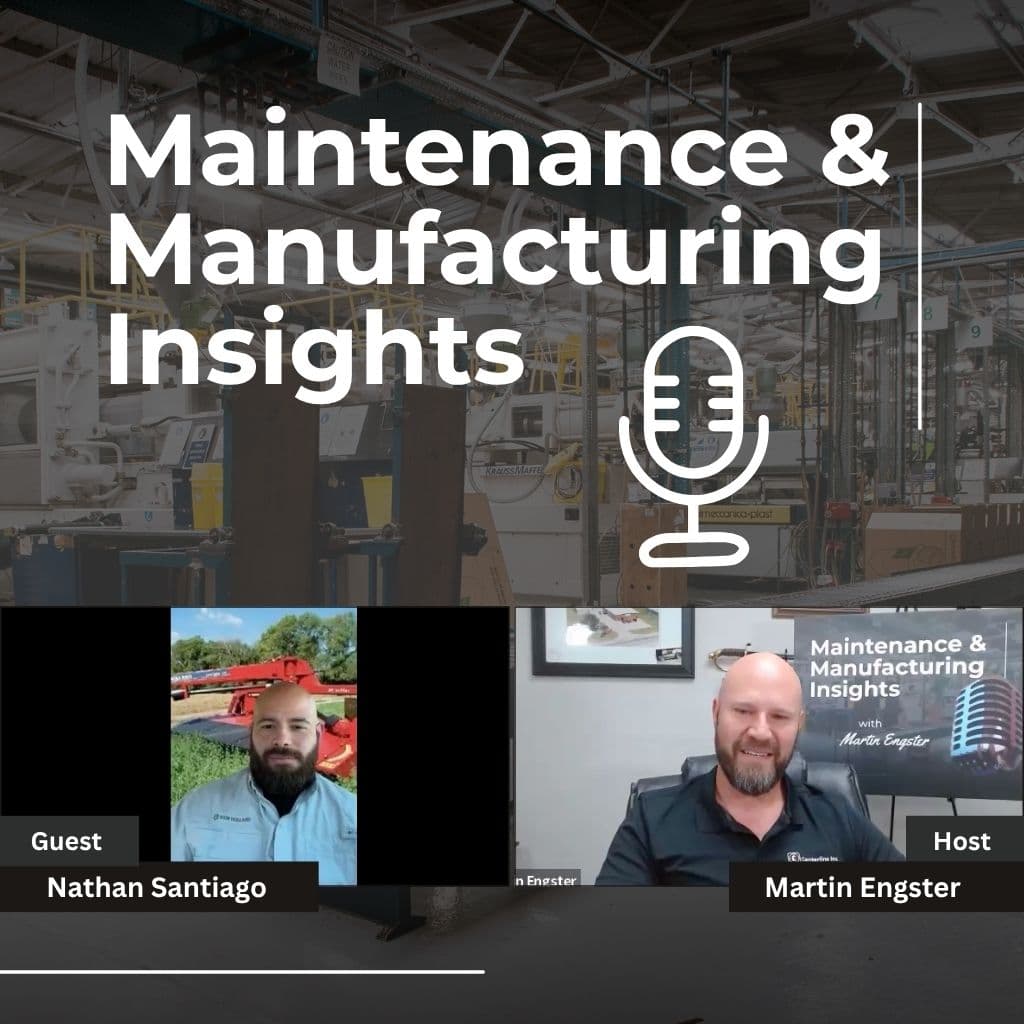
Every manufacturing facility depends on one thing: keeping production moving. In a recent episode of Maintenance & Manufacturing Insights, I had the opportunity to sit down with Nathan Santiago, a Facilities Engineer at C&H/New Holland, to discuss the strategies that help large manufacturing operations reduce downtime and improve reliability.
Looking Beyond Preventive Maintenance
Nathan shared how his role focuses on supporting the critical systems that keep manufacturing running, including electrical infrastructure, compressed air, hydraulics, gases, and facility operations.
One of the biggest takeaways from our conversation was that preventive maintenance isn't simply about following the manufacturer's recommendations. Equipment that runs around the clock often requires maintenance schedules based on actual operating conditions. Nathan explained how his team works with maintenance personnel and engineers to adjust maintenance intervals so equipment remains reliable without disrupting production.
Putting Tools Where They're Needed
Another topic we discussed was the importance of organizing maintenance resources.
Nathan explained how keeping specialized tools and frequently used spare parts close to critical equipment dramatically reduces repair time. Instead of technicians searching the plant for the right tools, everything is positioned where it's needed most, allowing maintenance teams to respond quickly and get production back online faster.
Solving Problems Through Continuous Improvement
Nathan also shared an excellent example of how small process improvements can create significant results.
His team discovered recurring downtime on laser cutting equipment wasn't caused by the machines themselves but by the process used to exchange material bins. By adjusting the workflow so empty bins were immediately returned, they eliminated hundreds of hours of lost production time.
That improvement also highlighted another issue — they now needed additional bins to support the increased production rate. Using data to support the decision, the team secured the additional resources needed to maintain the improved workflow.
Preparing for the Unexpected
Facility maintenance isn't limited to machinery.
Nathan described how severe storms exposed roof leaks that allowed several inches of water into parts of the manufacturing plant. His team quickly implemented temporary solutions to redirect the water before emergency roof repairs were completed, minimizing disruptions and keeping production moving.
Final Thoughts
I enjoyed hearing Nathan's practical approach to maintenance, reliability, and continuous improvement. His experiences demonstrate that reducing downtime often comes from preparation, teamwork, and a willingness to improve processes one step at a time.
If you'd like to connect with Nathan Santiago, you can find him on LinkedIn.
Watch & Listen
If you haven't listened yet, I encourage you to check out my conversation with Nathan Santiago: